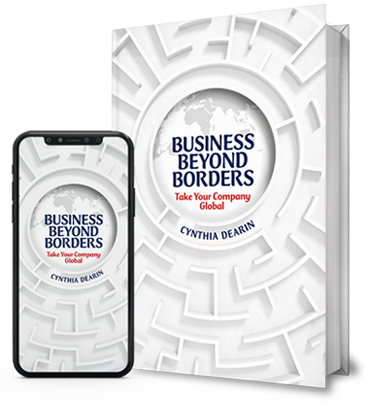
Interested in expanding your business internationally? Pick up a copy of my latest book, Business Beyond Borders: Take Your Company Global.
As I’ve discussed in my previous blogs on international logistics and export documentation, there’s a lot to make sure you get right when shipping products overseas.
Follow this checklist to make sure you’ve covered all your bases and have a successful international shipment:
1. Agree Incoterms before you get started
Before you sign an agreement with an international customer, make sure you are clear about who is paying for what and how risk will be allocated between you and the customer during the shipping process. You do this by deciding which Incoterm will govern your commercial agreement.
2. Get quotes and choose your route
Next, it’s time to negotiate quotes for shipping. Here are some things you will need to take into account.
Your preferred method of shipping: As I mentioned in my previous blog, there are pros and cons to both shipping by air and shipping by sea. Ocean freight is typically less expensive, but air freight is much faster. The best choice for you will depend on how much you are willing to pay, how urgent your shipment is, any contractual obligations you have to your buyer, how much stock you have on hand and what your competitors are offering.
What you are shipping: Knowing the full specification of the product you are shipping is critical to ensure your export goes to plan. For a start, the kind of goods you are shipping will impact on the price of quotes you receive and will affect how they must be transported. For example, some kinds of goods, such as lithium batteries must be packed in a specific way. Goods containing natural materials must be treated or fumigated, while goods that are classified as dangerous goods may require a permit before they can be shipped.
The size of your shipment: Knowing the size of your shipment (weight, dimensions and volume) is important when requesting a quote and determining your route, because it will influence the cost to ship. It is also important when it comes to deciding what equipment you need to ship your goods.
Collection and delivery address: Once you know how you will ship your goods, you will need to specify exactly where your goods will be shipped to. This will determine the length of the route (including whether transhipment will be required) and the price of quotes you receive.
3. Prepare your consignment
You have accepted a quote from a shipper and have agreed on pricing… now it’s time to prepare your consignment and make sure your cargo is securely packed. Depending on what you are shipping, this may involve:
- Ensuring you use the correct packaging if you are shipping dangerous goods,
- Understanding the import requirements of the destination country
- Selecting the right containers to ship your goods – e.g. If you need refrigerated shipping
Attention to detail is very important at this stage of the shipping process. You will avoid delays and extra costs if the preparation of your consignment is managed correctly.
4. Prepare your documentation
Export documentation is detailed and there are several pieces of paper you will need to get ready before you can export. I have listed these above.
5. Complete your shipper’s letter of instruction
A Shipper’s Letter of Instruction (SLI) is mandatory for all exports and sets out the precise requirements of your shipment from beginning to end. It formalises how your shipment should be handled, and grants authority to your freight forwarder to act as the authorised agent to deal with customs. It is essential to complete this document so that misunderstandings about the shipment do not occur.
6. Pay for your shipment
Once you have booked your shipment, pay for the shipping promptly to ensure goods are not held up on arrival.
7. Track your shipment
You’re good to go! Once instructions are given to your forwarder, they will organise the movement of your cargo to meet cut off times and security requirements of carriers. From here, you can track your cargo online to see when goods will arrive at their intended destination.